


May Faculty Recognition
Thomas D'Amico, MD; Joseph Fernandez-Moure, MD, MS; Kevin Saunders, PhD; Kevin Southerland, MD; Betty Tong, MD, MS, MHS
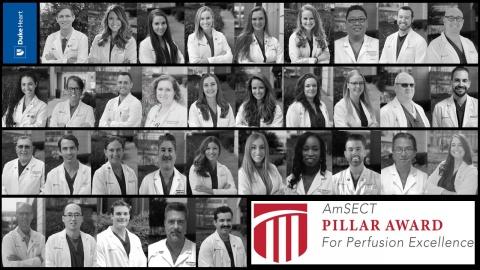
Perfusion Team Recognized with AmSECT’s Inaugural Pillar Award
Duke Perfusion Services has been named one of the inaugural recipients of the Pillar Award for Perfusion Excellence by the American Society of Extracorporeal Technology (AmSECT).
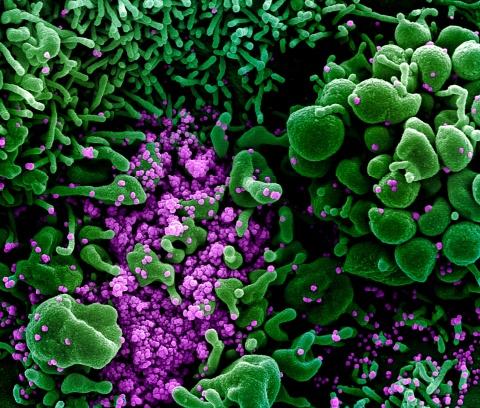
Duke Researchers Testing Novel Therapeutics for Early and Acute Stages of COVID-19
During the acute stage of COVID-19, the immune system mounts an overwhelming inflammatory response to the SARS-CoV-2 virus. This influx of proinflammatory proteins, known as the “cytokine storm,” causes damage to lung tissue and results in acute respiratory distress syndrome (ARDS).

Great COVID-19 Saves: How ECMO Helped a Pregnant Patient Meet Her Newborn Son
Photo above: Takia Morrison is discharged after recovering from COVID-19
When a baby is born, one of the first people they meet is their mother. For one newborn earlier this year, this was not the case, for his mother, Takia Morrison, was diagnosed with COVID-19. In the wake of the pandemic, caution and the safety of everyone is crucial, and a team at Duke University Hospital was ready to treat Ms. Morrison.

Duke Tests Novel COVID-19 Therapy, Is Lead Enroller in International Trial
The early stage of COVID-19 offers a critical window of opportunity to prevent the progression of the disease to the acute state, when patients require supportive care. By targeting the SARS-CoV-2 virus early on, a therapeutic can help to quickly eliminate the virus from the body while the patient’s symptoms are mild.

Nine Specialty Areas at Duke Children’s Hospital Rank in the Top 50 by U.S. News
U.S. News & World Report has ranked Duke Children’s Hospital among the top 50 children’s medical centers nationally and the only hospital in North Carolina with nine of 10 specialties ranked in the magazine’s analysis.

Transplantation at Duke in the Time of COVID-19
Transplantation remains the last hope for many patients with end-stage organ failure. However, the COVID-19 pandemic has resulted in a nationwide decrease in transplants and organ donation.
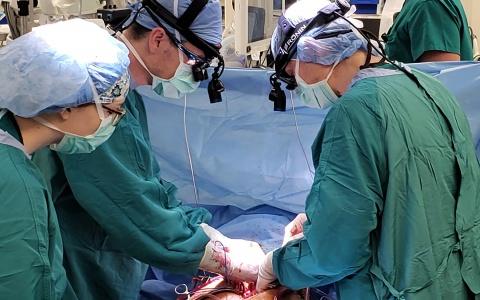
Giving Life: Duke Surgeons Perform First Donation After Circulatory Death Heart Transplant in the United States
Approximately 6 million patients in the United States live with heart failure. Of those, 10% will progress to end-stage heart failure. While there is no cure, heart transplantation can bring hope to patients when other treatments no longer can.