Overview
Establishment and maintenance of tissue architecture involve fine-tuning of proper cellular organization, cell-cell interactions and signaling cascades to ensure proper organ function. Our goal is to study cellular interactions and mechanisms regulating proper establishment and maintenance of tissue organization. Our lab investigates the cellular and molecular pathways governing vascular regeneration and cell–cell crosstalk in the context of lung injury-repair and disease. Through an integrated approach spanning molecular profiling, imaging, and functional assays, we aim to define how vascular networks regenerate, communicate, and contribute to rebuilding of a functional lung architecture.
Selected Projects
- Endothelial cell contributions to alveolar regeneration and disease
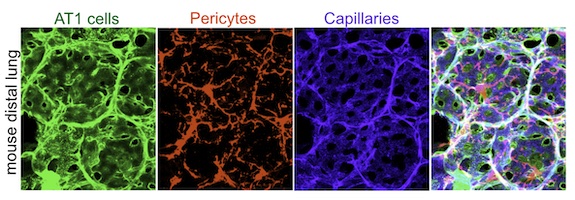
Our laboratory aims to decipher how the vascular system contributes to lung repair and regeneration after injury. We are particularly interested in how endothelial cell heterogeneity, signaling networks, and spatial organization shape the regenerative microenvironment. Using single-cell and spatial transcriptomics, proteomics, high-resolution imaging, lineage tracing mouse models, we aim to identify factors that drive alveolar regeneration and maintain vascular integrity. We also investigate how these normal regenerations fail in chronic diseases such as idiopathic pulmonary fibrosis (IPF), where endothelial dysfunction contributes to aberrant repair and vascular remodeling.
-
Understanding the role of pericytes in in normal, regenerating, and pathological tissues
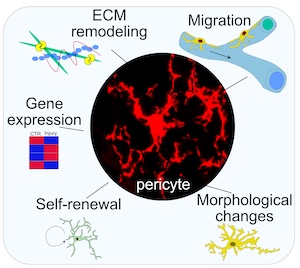
Pericytes are perivascular mural cells that play key roles in stabilizing blood vessels, regulating endothelial barrier function, and shaping the extracellular matrix. However, their precise functions during lung injury and repair remain poorly understood. Our lab aims to uncover how pericytes contribute to vascular and tissue regeneration in the lung. We seek to define the molecular identity, plasticity, and functional states of pericytes in both normal and injured lungs, and to determine how they communicate with endothelial and epithelial cells to coordinate vascular remodeling and alveolar regeneration.
-
Development of ex vivo culture models to study vascular remodeling and regeneration
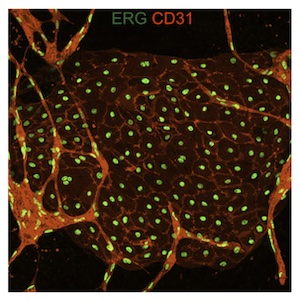
Our laboratory aims to develop mouse and human ex vivo endothelial two-dimensional or three-dimensional cultures by recreating the structural, mechanical, and biochemical cues within their niche. These systems will allow us for direct observation of endothelial responses to injury signals, growth factors, or pharmacological interventions. In addition, our goal is to establish co-culture systems using endothelial, epithelial, mesenchymal and immune cells that will allow us to dissect of cellular crosstalk underlying lung regeneration and disease progression. We aim to establish methods to introduce cell type-specific genetic alterations in this ex vivo cultures to recapitulate human pathophysiology in a dish. This work will form the basis to develop future therapeutic for human alveolar regeneration.
- Dynamic reorganization of cytoskeleton and cell organelles during endothelial and epithelial cell transitions
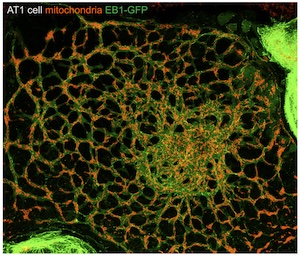
During transitions between different cellular states, cells undergo striking morphological changes. These shape changes are accompanied by dynamic reorganization of the cytoskeleton and intracellular organelles. We aim to define the dynamic remodeling of the cytoskeleton and intracellular organelles that enables endothelial and epithelial cells to adapt, migrate, and establish new identities. By dissecting these structural and functional changes, we seek to understand how cytoskeletal and organelle dynamics coordinate cell to adapt their architecture during tissue repair and regeneration.
Publications and Funded Projects
To view a list of Dr. Tata's funded projects, view her faculty profile.
Publications
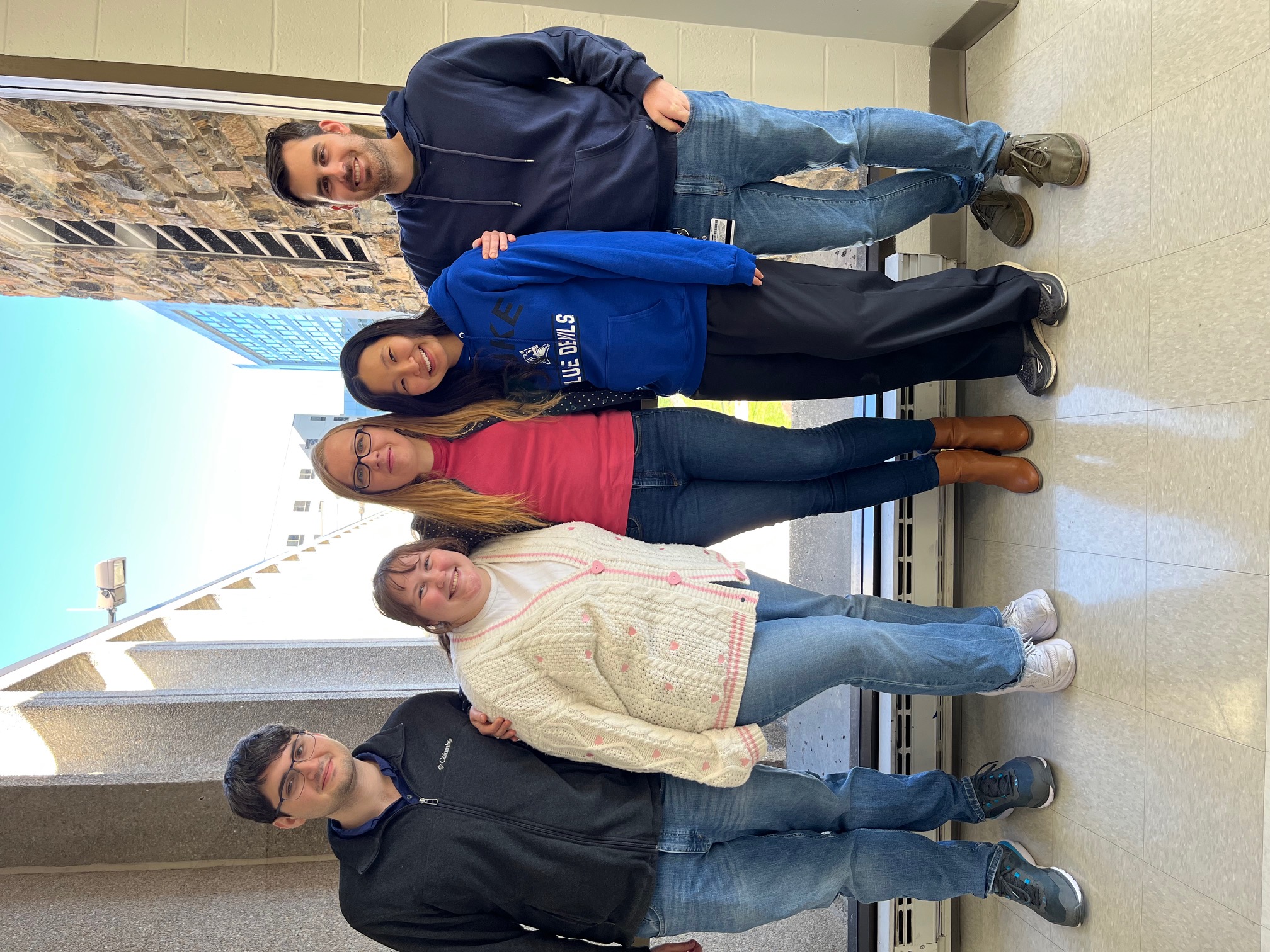
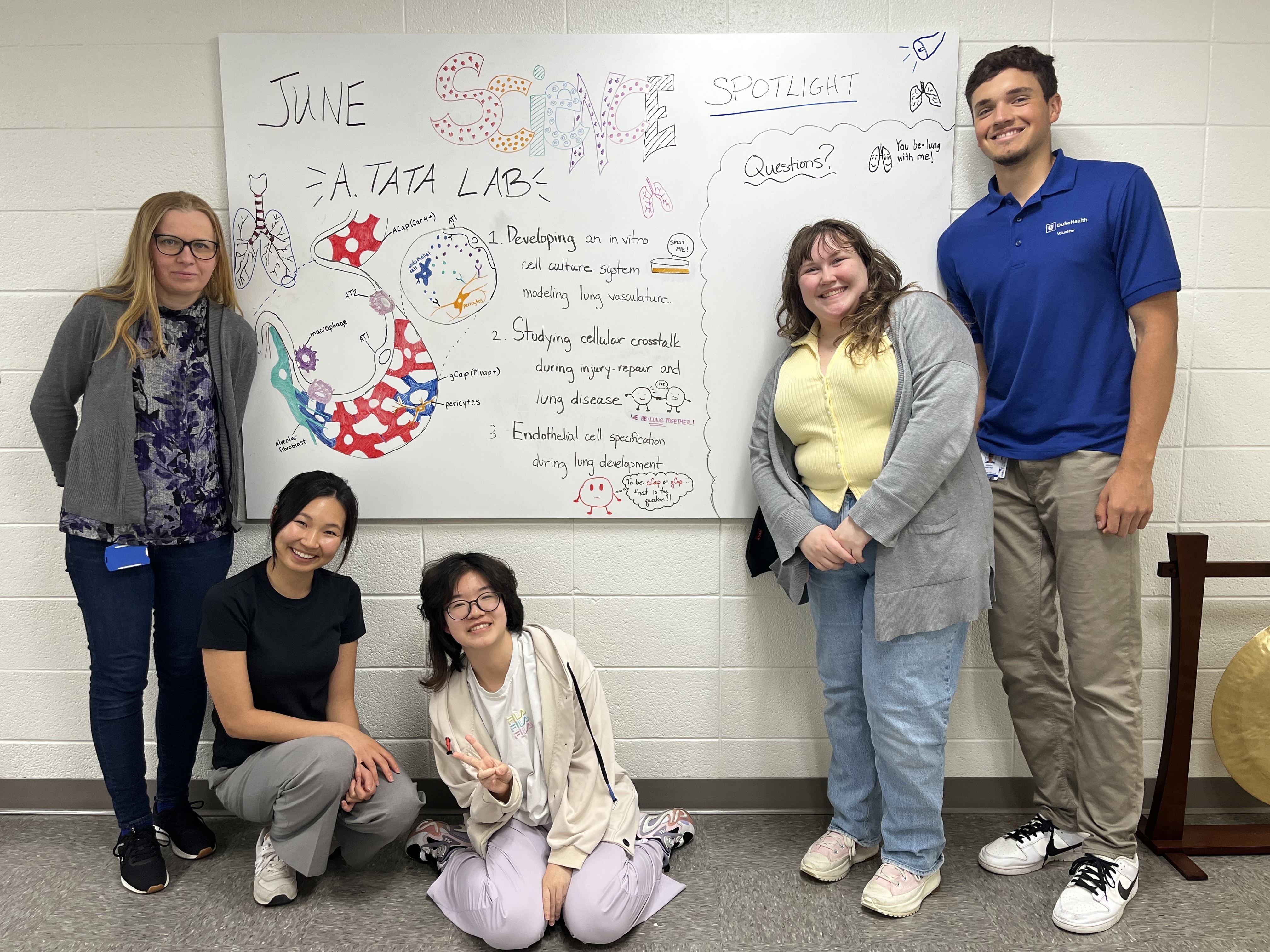
Lab Members
Aleksandra Tata, PhD, Principal Investigator
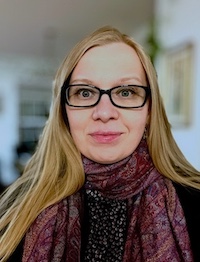
Aleks was born in a small town in Poland. She completed her high school education in her hometown and went on to earn a Master of Science in Molecular Biology from the Department of Cell Biology at Nicolaus Copernicus University in Torun, Poland. She then obtained her Ph.D. in Molecular Medicine from the Institute of Biochemistry and Molecular Biology at the University of Ulm, Germany. Aleks completed her postdoctoral fellowship in the Department of Neurobiology at Harvard Medical School, where she studied the vascular network, signaling cascades in endothelial cells, and the blood–brain barrier (BBB). In 2016, she joined Duke University as a Senior Research Associate in the Department of Cell Biology and was later promoted to Assistant Research Professor. She is currently an Assistant Professor in the Division of Surgical Sciences, Department of Surgery, with a secondary appointment in the Department of Cell Biology. In her free time, Aleks enjoys traveling and spending time with her family.
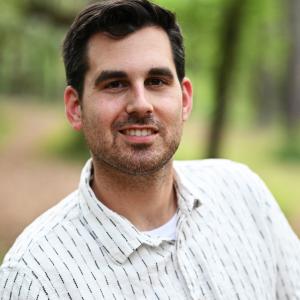
Josh is originally from Illinois, where he graduated from Bradley University in 2018 with a Bachelor's in Cell and Molecular Biology. He then pursued a PhD at Duke University in the Developmental and Stem Cell Biology program. His thesis work in Josh Snyder's lab focused on the molecular determinants of cancer initiation and progression. In 2025, Josh joined the Aleks Tata lab to study the microvasculature's contribution to the pathogenesis of pulmonary disease.
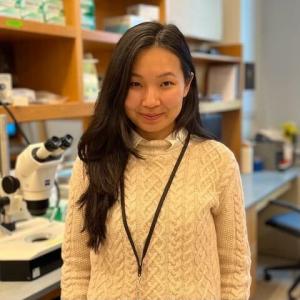
Khaliun was born in Mongolia and completed her undergraduate degree in Biology at Boston University. She joined the Aleks Tata lab in May 2025 through the DSCB PhD program. Broadly, Khaliun is interested in the mechanisms that underlie cytoskeletal remodeling and intracellular organization and how these processes give rise to diverse cell shapes. Outside of the lab, she enjoys hiking, cooking and reading whodunit novels!
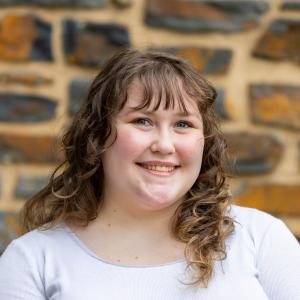
Bailey is originally from Upstate New York. She graduated from the University of Pittsburgh in 2021 with dual BS degrees in Biology and Gender, Sexuality, and Women’s Studies. She worked as a research technician in Pittsburgh studying retroviral restriction factors for two years before moving to Durham in 2024 and joining the Tata lab. In the lab, she is studying how cells in the lung respond to injury using human and mouse tissue samples. She plans on applying to PhD programs in the Research Triangle area and hopes to study type one diabetes. When she is not in the lab, she enjoys crafting, reading and hanging out with her cat, Jeff.
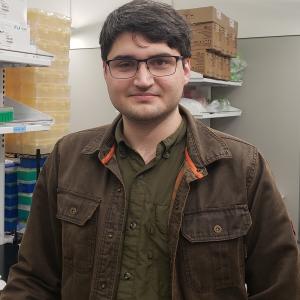
Lucas is originally from western North Carolina. He is a graduate of North Carolina State University with a BS in Biology with a concentration in Human Biology and minors in Psychology, Microbiology, and Cognitive Science. He then completed his Master's in Biomedical Science here at Duke. He has previously worked as a research technician investigating the neurotensin receptor in relation to drug discovery for pain relief and potential chemotherapy. In his free time, he enjoys reading.
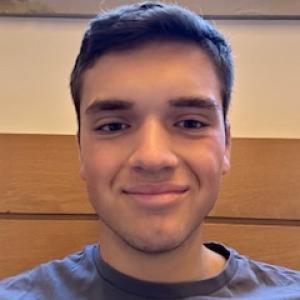
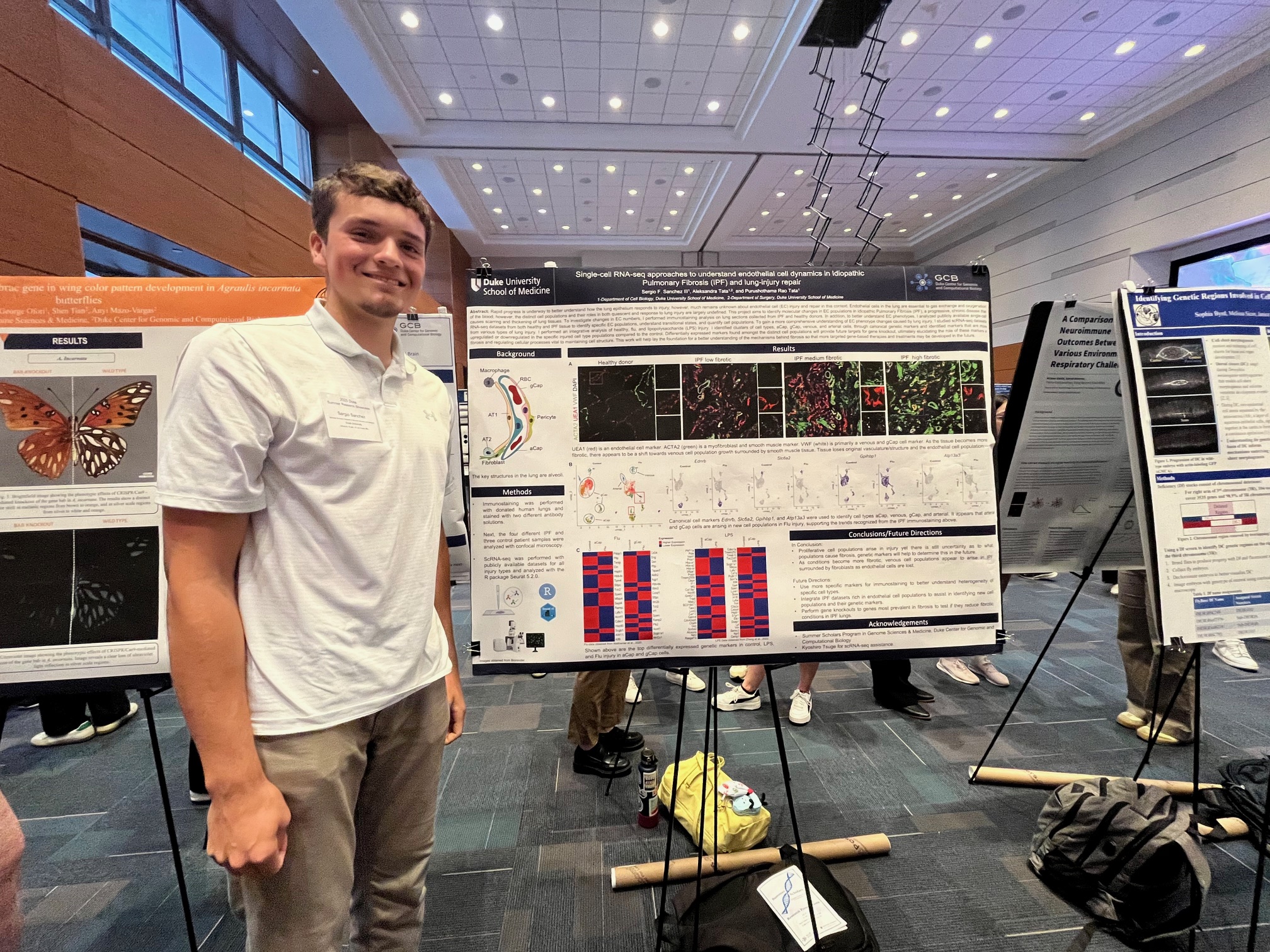
Sergio is from Ashburn, Virginia, and is currently a sophomore undergraduate at Duke University majoring in Biology with minors in Chemistry and Spanish. After graduation, he plans to pursue an MD or an MD/PHD. In the lab, he is interested in studying how endothelial cells differentiate and shift identity in response to lung injury and disease, from both a genetic and structural standpoint. In his free time, he enjoys weightlifting, playing baseball, reading (especially science fiction and thrillers), and trying new restaurants in Durham.
Contact Us
We are always looking for motivated, curious and hardworking individuals to join our team. If you are interested in learning more, please email aleksandra.tata@duke.edu and include the position you are seeking (e.g., graduate student, postdoc, analyst, etc.) and how your research interests intersect with our lab’s mission.
Collaborators
Are you interested in collaborating? We support team science and would love to hear about your work and how we can engage with you. Please email aleksandra.tata@duke.edu.
Lab Photos